

How to Incorporate a Wine Refrigerator into Your Outdoor Kitchen Design
Outdoor kitchens are becoming an essential extension of luxury living, and adding a wine refrigerator can elevate both function and elegance. But before installing one, there are several important considerations that blend design, durability, and placement strategy.
Why Add a Wine Refrigerator to Your Outdoor Kitchen?
A wine fridge in your outdoor kitchen isn’t just about chilling your favorite vintages. It:
- Creates a designated space for beverage service.
- Keeps guests from needing to go indoors.
- Elevates the aesthetics and functionality of your outdoor entertainment zone.
- Protects wine from temperature fluctuations when chosen correctly.
Choose the Right Wine Refrigerator for Outdoor Use
Not all wine refrigerators are created for outdoor conditions. Look for:
- Weatherproofing: Units should be UL-certified for outdoor use and sealed against moisture.
- Temperature Range: Dual-zone cooling is ideal if you store both reds and whites.
- UV Protection: Outdoor units should have UV-protected, tempered glass doors.
- Durability: Stainless steel exteriors are best for resisting rust and corrosion.
Location Matters: Placement Tips for Optimal Performance
Poor placement can lead to underperformance or early wear. Consider:
- Shade & Ventilation: Avoid direct sun and provide enough air clearance.
- Proximity to Power: Confirm access to GFCI-protected outlets.
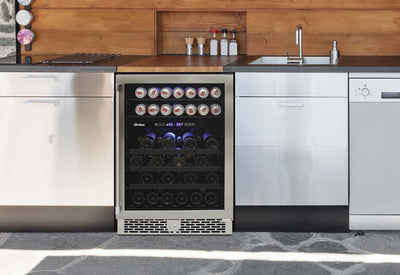
- Built-In vs. Freestanding: Built-in models offer a seamless look but require ventilation planning.
Integrating Design Aesthetics
Blend your wine cooler seamlessly with the rest of your outdoor kitchen by:
- Matching finishes (stainless steel, matte black, etc.)
- Aligning handle styles and appliance profiles
- Framing it with outdoor cabinetry or stonework
Bonus Tip: Consider clear glass if you want to showcase bottles—or solid panel doors if you prefer a minimalist look.
Maintenance Considerations for Longevity
Outdoor appliances face harsher elements. Keep your unit in top shape with:
- Routine Cleaning: Clean condenser coils and wipe the exterior regularly.
- Weather Protection: Use a custom cover when not in use or during off-season months.
- Seal Checks: Make sure gaskets remain tight and intact to maintain cooling efficiency.
Frequently Asked Questions (FAQs)
Can I use a regular wine fridge outside?
No. Indoor wine refrigerators aren’t built to withstand outdoor humidity, temperature swings, or exposure. Always opt for outdoor-rated units.
Does my outdoor wine cooler need a cover?
Yes, especially if not under a roofed patio. Covers help protect from dust, rain, UV, and seasonal weather extremes.
What temperature should I set my wine fridge to?
- Red wines: 55–65°F
- White wines: 45–50°F
- Dual-zone models let you store both types optimally.
Can I build the wine fridge into my outdoor kitchen island?
Absolutely—just make sure to choose a front-venting built-in model and leave adequate clearance for airflow.
Is it worth adding a wine fridge to my outdoor kitchen?
If you entertain often or enjoy chilled wine, yes—it enhances both convenience and luxury appeal.
Make It Functional and Beautiful
A wine refrigerator isn't just a luxury—it’s a practical, stylish upgrade to your outdoor kitchen. Prioritize units rated for exterior use, and make smart decisions around placement and design. Doing so ensures long-term reliability and a sleek look that enhances your entire backyard space.
Share this
Popular posts

Popular posts

